

Hearing your baby grind their teeth for the first time can be an unsettling experience. That scraping, grating sound coming from the cot at night is enough to make any parent sit up and wonder what is going on.
At Good Choice Dental, we understand how much parents want to feel informed about their child’s oral health. Our team works with families across Burwood and surrounding suburbs, and baby teeth grinding comes up often in our kids’ dentistry appointments.
Quick Overview
- Baby teeth grinding, known as bruxism, is the involuntary clenching or grinding of the upper and lower teeth
- It may affect many babies and toddlers, often beginning around the time the first tooth appears
- It is often linked to teething, sleep patterns, and jaw development, though the exact cause can vary
- Whether it causes any concern depends on how long it lasts, how frequent it is, and whether the child shows any signs of discomfort
- A dental check is a useful next step if grinding persists, worsens, or is accompanied by jaw pain or visible tooth changes
Below, we explain why baby teeth grinding happens, when it is a normal part of development, and what parents can do at home and when to seek advice.
 Is Baby Teeth Grinding Normal?
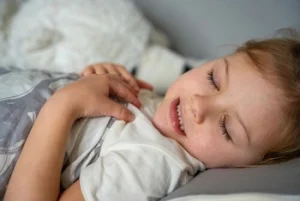 Is Baby Teeth Grinding Normal?
For most babies and toddlers, teeth grinding is a completely normal part of early development. It tends to start around the time the first tooth appears and is common through the toddler years.
Teeth grinding in children is common, and most children outgrow it without lasting problems. The sound can seem alarming, but in many cases, it does not cause pain or damage to the baby teeth.
Why Do Babies Grind Their Teeth?
There is no single cause. Most cases of baby grinding teeth involve a combination of factors that reflect how quickly a young child’s mouth and jaw are changing.
Teething and new teeth emerging. When new teeth push through the gums, babies often explore the new sensation by pressing the upper and lower teeth together. A cold teething ring or gentle gum massage may help ease the discomfort that can trigger this.
Jaw development. A baby’s jaw is growing rapidly. Temporary grinding may simply be how the jaw adjusts as new teeth emerge and bite alignment shifts. This kind of temporary grinding often resolves on its own.
Sleep patterns. Sleep bruxism, which occurs during sleep, is particularly common in young children. Disrupted or restless sleep can increase the likelihood of grinding.
Discomfort from other causes. Ear infections and general discomfort have also been linked to grinding, as babies may clench their jaw in response to pain they cannot communicate.
In some cases. Less commonly, grinding may be associated with certain medical conditions, including cerebral palsy, or as a side effect of some medications used to treat ADHD. If you have concerns in this area, speak with your child’s dentist, who can help assess what is happening and refer you to the right support.
When Should Parents Be Concerned?
Most children who grind their teeth during infancy and the toddler years do so only temporarily. Information on teeth grinding in children notes that many children simply grow out of it, and that not everyone who grinds their teeth needs treatment.
That said, there are situations where it is worth discussing with a dentist: 
- Grinding is frequent and has been going on for more than a few weeks
- Your child wakes with jaw pain or seems unsettled in the mornings
- You can see visible wear, chipping, or flattening on the baby teeth
- Grinding continues as permanent teeth start to come through
- Your child’s sleep appears regularly disrupted
Excessive grinding that persists into the years when permanent teeth are present carries a greater risk of causing dental damage, so earlier monitoring is helpful.
Practical Tips to Help at Home
While there is no guaranteed way to stop a baby from grinding their teeth, a few approaches may help reduce grinding or address the factors behind it.
Reducing stress and supporting better sleep are among the practical approaches used for bruxism management. For babies and toddlers, this might look like:
- Offering a safe teething toy or cold teething ring before sleep to ease sore gums
- A consistent and calming bedtime routine to support settled sleep
- Gentle gum massage to soothe discomfort when new teeth are coming through
- Ensuring your child is comfortable and that any known sources of discomfort, such as teething pain, are addressed
These practical tips will not stop grinding in every case, but they support the conditions that make grinding less likely.
A Calm Approach to Your Child’s Oral Health
Baby grinding teeth is something many families encounter, and in most cases, it passes as the child grows and the bite develops. The important thing is knowing what to watch for and feeling comfortable reaching out when something does not seem right.
At Good Choice Dental, we welcome children from an early age and make every visit as comfortable as possible. Our team is happy to check your child’s teeth and gums, monitor any wear, and let you know whether any further steps are needed.
If you have noticed your baby grinding their teeth and want a professional opinion, call Good Choice Dental on (02) 8203 8760 or book an appointment online.
Frequently Asked Questions
Can baby teeth grinding affect how my child’s jaw develops?
 For most babies, temporary grinding does not cause lasting changes to jaw development. The jaw is growing and adapting rapidly during infancy and the toddler years, and some grinding is part of how the bite naturally adjusts. In cases where grinding is persistent or severe, a dentist can assess whether it is placing any unusual pressure on the jaw joints and advise on whether monitoring is needed. Individual circumstances vary.
Is it normal for grinding to be louder at night than during the day?
Yes. Sleep bruxism, which occurs during sleep, tends to be more forceful and audible than any grinding that happens while a child is awake. This is because the conscious controls that normally limit jaw force are reduced during sleep. The sound can seem alarming but is not in itself a sign that something is seriously wrong. If you are concerned about the intensity or frequency of nighttime grinding, a dentist can check your child’s teeth for any signs of wear.
References
de Baat, C., Verhoeff, M., Ahlberg, J., Manfredini, D., Winocur, E., Zweers, P., Rozema, F., Vissink, A., and Lobbezoo, F. (2021). ‘Medications and addictive substances potentially inducing or attenuating sleep bruxism and/or awake bruxism’. Journal of Oral Rehabilitation, 48(3). Hoboken, NJ: John Wiley and Sons. https://pmc.ncbi.nlm.nih.gov/articles/PMC7984358/
Healthdirect Australia. (2024). ‘Teeth grinding (bruxism)’. Healthdirect Australia, 15 September. Sydney, NSW: Healthdirect Australia. https://www.healthdirect.gov.au/teeth-grinding
Pregnancy Birth and Baby. (2024). ‘Teeth grinding (bruxism) in children’. Pregnancy Birth and Baby, 13 December. Sydney, NSW: Healthdirect Australia. https://www.pregnancybirthbaby.org.au/teeth-grinding


Tooth decay is one of the most widespread dental health issues faced by people of all ages. But what are the 4 causes of tooth decay? Understanding them is important for anyone who wants to Read more
Recent Comments