
Teeth whitening is one of the most commonly requested cosmetic dental treatments in Australia. Alongside its popularity comes a question that dentists hear often: does whitening actually damage your teeth, or is that a myth?
The concern is understandable. With so many products available online, over the counter, and through dental clinics, it is not always clear what is safe, what works, and what might cause harm in the wrong circumstances. Understanding how professional teeth whitening differs from unregulated alternatives is a good place to start.
Quick Overview
- Teeth whitening uses hydrogen peroxide or carbamide peroxide to break down surface stains and lighten tooth colour
- It may suit adults with extrinsic staining from food, drink, or ageing, though suitability depends on individual oral health and enamel condition
- When carried out under dental supervision, whitening is not associated with permanent damage to tooth structure; risks are more closely linked to unsupervised or excessive use
- Outcomes and side effects, including temporary sensitivity and gum irritation, vary based on product concentration, application method, and the condition of existing teeth
- A dental assessment beforehand helps identify whether whitening is appropriate and which approach carries the least risk for your situation
Keep reading to understand how whitening agents work, what the risks actually are, and what separates safe whitening from potentially harmful approaches.
How Does Teeth Whitening Work?
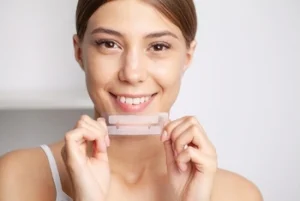 Whitening products use bleaching agents, most commonly hydrogen peroxide or carbamide peroxide, to lighten the colour of the tooth. These agents penetrate the outer enamel layer and break apart the stain molecules that have built up over time from sources like coffee, tea, red wine, and natural ageing.
The process targets surface stains and the deeper staining that has absorbed into the enamel. It does not alter the underlying tooth structure when used at the correct concentration and for the appropriate duration.
A dentist can assess which type of staining is present and whether whitening is likely to be effective before treatment begins.
Does Teeth Whitening Damage Tooth Enamel?
Professional teeth whitening, when carried out or supervised by a dentist, is unlikely to cause lasting damage to the enamel or tooth structure. Side effects do occur, but they are typically temporary and resolve within a day or two of treatment.
The most common effects are:
Tooth sensitivity. Whitening agents can temporarily open microscopic pores in the enamel, allowing the gel to reach the dentine layer underneath. This can cause short-term sensitivity to cold or hot temperatures. It is not a sign of damage and generally settles within 24 to 48 hours.
Gum irritation. If whitening gel makes contact with the soft tissues of the gum, it can cause temporary redness or irritation. This is more likely with ill-fitting trays or over-the-counter products without professional oversight. Custom-fitted trays prepared by a dentist help keep gel on the teeth and away from the gums.
Where damage does occur, it is typically the result of overuse, using products with excessively high peroxide concentrations without supervision, applying whitening to teeth that already have enamel wear, cracks, or untreated decay, or continuing treatment despite persistent sensitivity or discomfort.
Who Should Not Use Whitening Products?
Whitening is not appropriate for everyone. A dentist should assess your oral health before any whitening treatment begins.
Whitening is generally not recommended if you:
- have active gum disease or untreated tooth decay
- have significant enamel erosion or exposed root surfaces
- have existing cracks in your teeth
- are pregnant or breastfeeding
- are under 18 years of age, as the tooth structure is still developing
- have crowns, veneers, or fillings in the front teeth, as these do not respond to bleaching and can result in uneven colour
These factors increase the risk of sensitivity, discomfort, or uneven results. Identifying them before treatment starts is one of the primary reasons a professional assessment matters.
Professional Whitening Versus Over-the-Counter Products
In Australia, only a registered dental practitioner can legally use or supply whitening products containing more than 6% hydrogen peroxide or 18% carbamide peroxide. This limit exists because higher peroxide concentrations carry a greater risk of soft tissue burns, pulp inflammation, and enamel irritation when used without professional assessment and oversight.
 Over-the-counter products sold in pharmacies and supermarkets contain lower concentrations of active agent and are generally less effective at addressing deeper staining. They can still cause sensitivity or gum irritation if used incorrectly, and the trays included are not custom-fitted to an individual’s teeth.
Products purchased online or from overseas may not meet Australian safety standards and may contain peroxide concentrations above the legal consumer limit. These carry a higher risk of enamel irritation, soft tissue burns, and other complications.
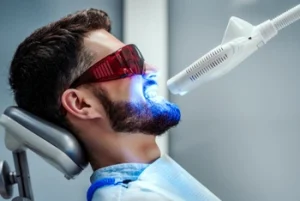
In-chair whitening performed by a dentist uses higher concentrations under controlled conditions. The dentist protects the gum tissue beforehand, monitors the process, and can adjust the treatment in response to how your teeth are responding. Take-home kits provided by a dentist come with custom-fitted trays and a formulation calibrated to your individual situation, which reduces the risk of the side effects associated with generic products.
What About Whitening Toothpastes and Home Remedies?
Whitening toothpastes work differently from gel-based treatments. They typically contain mild abrasives or low concentrations of peroxide that help remove surface stains from the outer enamel layer. They do not bleach the tooth or lighten its underlying colour.
Some can make teeth more sensitive over time if used frequently, particularly those with stronger abrasive formulations.
Home remedies such as baking soda, charcoal, lemon juice, and fruit-based concoctions are sometimes promoted on social media as natural whitening options. Some natural alternatives carry a real risk of enamel erosion or gum irritation due to their acidity or abrasiveness, and this is not offset by any evidence of meaningful whitening effect.
How Long Do Results Last?
Whitening results are not permanent. How long they last depends on individual habits, particularly consumption of staining foods and drinks such as coffee, tea, and red wine, as well as tobacco use and oral hygiene practices.
In-chair whitening typically produces a more immediate result, while take-home treatment with custom trays is a more gradual process. Neither is inherently superior in terms of final outcome. Results can be maintained with occasional top-up treatment at home, following advice from your dentist.
What to Expect Before and After Whitening
Before any whitening treatment, a dental check-up is worthwhile. This allows the dentist to identify existing enamel wear, untreated decay, or gum issues that could increase the risk of sensitivity or mean whitening is not suitable at that time.
After whitening, some short-term sensitivity is normal. Using a soft toothbrush, a toothpaste formulated for sensitive teeth, and avoiding very cold or hot food and drink for the first day or two can help manage this.
If sensitivity continues beyond 48 hours, feels severe, or is accompanied by persistent gum pain, it is worth speaking with your dentist. Whitening-related sensitivity of this kind is uncommon when treatment is properly supervised but can occur if there are pre-existing conditions that were not identified beforehand.
A Considered Approach to Teeth Whitening
The evidence on professional teeth whitening is reassuring: when used correctly and under appropriate supervision, it is not associated with permanent damage to the tooth structure. The risks are real but manageable, and they are significantly higher with unsupervised, excessive, or unregulated use.
Whether whitening is appropriate for you depends on the current condition of your teeth and gums, the type of staining present, and a few individual factors that a dentist is best placed to assess. Getting that assessment before starting any whitening treatment is the single most effective step you can take to protect your teeth.
At Good Choice Dental, our team can assess whether whitening may be suitable for your teeth and discuss the options that carry the least risk for your situation. Individual outcomes vary, and we take the time to understand your dental history before recommending any approach.
Call us on (02) 8203 8760 or book an appointment online.
Frequently Asked Questions
Does teeth whitening permanently damage enamel?
Professional teeth whitening carried out or supervised by a dentist is not associated with permanent enamel damage when used at appropriate concentrations and for the recommended duration. Temporary effects such as sensitivity and mild gum irritation can occur but typically resolve within a day or two. Damage is more closely linked to overuse, using products with high peroxide levels without supervision, or whitening teeth that already have enamel wear or untreated issues.
What are the side effects of teeth whitening?
The most common side effects are temporary tooth sensitivity and mild gum irritation. Sensitivity occurs because whitening agents can temporarily affect the dentine layer beneath the enamel. Gum irritation is more likely when whitening gel contacts soft tissue, which is less common with custom-fitted trays. Both effects are generally short-lived and resolve within 24 to 48 hours of treatment.
References
Australian Dental Association. (n.d.). ‘Policy Statement 2.2.8: Teeth Whitening (Bleaching) by Persons other than Dental Practitioners’. Australian Dental Association. Sydney, NSW: Australian Dental Association. https://ada.org.au/policy-statement-2-2-8-teeth-whitening-bleaching-by-persons-other-than-dental-practitioners
Dental Board of Australia. (n.d.). ‘Teeth whitening products’. Dental Board of Australia. Melbourne, VIC: Australian Health Practitioner Regulation Agency. https://www.dentalboard.gov.au/Codes-Guidelines/Practitioner-resources/teeth-whitening.aspx
Healthdirect Australia. (2025). ‘Teeth whitening’. Healthdirect Australia, February. Sydney, NSW: Healthdirect Australia. https://www.healthdirect.gov.au/teeth-whitening



Recent Comments