
The chewing surfaces of your child’s back teeth are not flat. They are covered in tiny grooves and pits that trap food particles and bacteria, areas where a toothbrush bristle simply cannot reach. Even children who brush regularly can find these surfaces hard to keep clean, and this is where tooth decay in kids most often begins.
For parents thinking about cavity prevention options, dental sealants for kids are worth understanding. They are one of the preventive measures used in kids dentistry services to help protect the back teeth during the years when decay risk tends to be highest.
Quick Overview
- Dental sealants are thin protective coatings applied to the chewing surfaces of back teeth to help shield deep grooves from plaque and food particles
- They may be recommended for children whose permanent molars have recently come through, though suitability depends on the individual child’s teeth and risk of decay
- The application process does not require injections or drilling and takes only a few minutes per tooth
- How long sealants last and how well they perform can depend on the child’s diet, oral hygiene routine, and whether they are checked at regular dental visits
- A dentist can assess whether sealants are appropriate for your child and advise on timing based on when the molars emerge
Keep reading to understand how dental sealants work, when they are typically applied, and what to expect at the appointment.
Why Are Back Teeth More Vulnerable to Decay?
The molars at the back of the mouth have a different surface to front teeth. Their chewing surfaces are covered in deep grooves and pits, known as fissures, that make them particularly susceptible to tooth decay.
Food particles and plaque settle into these fissures and are difficult to dislodge with brushing and flossing alone. Even with good oral hygiene, bacteria can sit in these tight spaces and gradually break down the tooth surface over time.
According to Australian government data, only around 27% of children aged 6 to 14 had at least one fissure-sealed tooth in their permanent teeth. This figure suggests a significant portion of children in this age group may be going without the added protection sealants can offer.
What Are Dental Sealants?
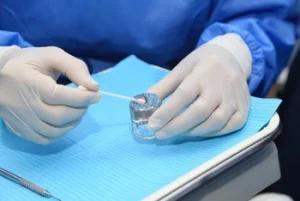 Dental sealants, also referred to as fissure sealants, are thin protective coatings applied to the chewing surfaces of the back teeth. They fill in the deep grooves and pits, creating a smoother surface that is easier to clean and less hospitable to bacteria.
Sealants are thin plastic coatings that cover the deep grooves on the chewing surface of back teeth and help prevent tooth decay by creating a smooth, easier-to-clean surface. They do not dissolve in saliva, are usually tooth coloured or clear, and do not require injections or drilling to apply.
Sealants typically last from two to seven years but may last longer with proper care. They are checked at regular dental visits and can be reapplied if they wear or chip over time.
When Are Dental Sealants Applied?
Timing matters when it comes to applying dental sealants for kids. The window of highest benefit is when the permanent molars first emerge.
The first permanent molars typically come through at around six or seven years of age. These are sometimes called the six-year molars and are among the most cavity-prone teeth in a child’s mouth. The second permanent molars follow at around 11 to 12 years of age.
Applying sealants shortly after these teeth emerge gives the best opportunity to protect them before any decay can begin. A dentist will check the condition of the tooth surface before applying sealants, as they work best on teeth that do not already show signs of decay.
What Does the Procedure Involve?
The dentist cleans and dries the tooth surface, then applies the sealant material into the grooves and pits. A special blue curing light is used to set the material, making it hard. The whole process takes only a few minutes per tooth.
Children generally find the procedure comfortable, which can support a positive dental experience from an early age. Keeping appointments routine and low-stress matters, and sealants are one of the less involved procedures in children’s preventive dentistry.
A Considered Approach to Your Child’s Dental Health
 Dental sealants for kids are a straightforward preventive option worth discussing with your child’s dentist, particularly as the first and second permanent molars come through. Whether they are appropriate depends on your child’s individual teeth, their risk of decay, and the condition of the tooth surface at the time of assessment.
Untreated decay in children often requires dental fillings or more involved treatment later on. Preventive care, including sealants where appropriate, can help reduce the likelihood of reaching that point.
At Good Choice Dental, our team works with children and families across the Sydney area. We welcome questions about preventive care options and can assess whether sealants may be suitable for your child at their next visit.
Call us on (02) 8203 8760 or book an appointment online.
Frequently Asked Questions
At what age should kids get dental sealants?
Dental sealants are most commonly applied when the first permanent molars come through at around six or seven years of age, and again when the second permanent molars emerge at around 11 to 12 years. The timing may vary depending on when the teeth appear and their condition at the time. A dentist can advise on the right window for your child.
How long do dental sealants last on kids’ teeth?
Sealants typically last between two and seven years, though they may last longer with proper care. They are checked at each dental visit and can be reapplied if they wear down or chip. Regular check-ups are the appropriate way to make sure sealants are still intact and providing protection.
References
Australian Institute of Health and Welfare. (2025). ‘Oral health and dental care in Australia: Preventative strategies’. Australian Institute of Health and Welfare, 6 November. Canberra, ACT: Australian Government. https://www.aihw.gov.au/reports/dental-oral-health/oral-health-and-dental-care-in-australia/contents/preventative-strategies
Better Health Channel. (2025). ‘Dental sealants’. Better Health Channel, 1 August. Melbourne, VIC: Victorian Government Department of Health. https://www.betterhealth.vic.gov.au/health/ConditionsAndTreatments/dental-sealants


Tooth decay is one of the most widespread dental health issues faced by people of all ages. But what are the 4 causes of tooth decay? Understanding them is important for anyone who wants to Read more
Recent Comments