
Veneers are designed to be a long-term solution. But circumstances change, and so do teeth. Whether your veneers have aged, become damaged, or you are simply reconsidering your options, the question of whether they can be removed is worth understanding before you commit to anything.
The answer depends largely on what type of veneers you have and how your teeth were prepared when they were placed. Both the removal process and what comes after vary significantly between porcelain veneer types and composite veneers.
Quick Overview
- Veneers can be physically removed, but whether the process is reversible depends on the type of veneer and how much tooth structure was altered during placement
- Porcelain veneer removal may suit patients whose veneers have aged, cracked, or no longer fit well, though the teeth underneath will typically need ongoing coverage
- The removal process involves carefully detaching the bonded veneer and cleaning the tooth surface, though the extent of what follows depends on the condition of the underlying tooth
- Outcomes after removal vary based on how much enamel was removed originally, the health of the underlying tooth, and the patient’s goals for what comes next
- A dental assessment is the appropriate starting point for anyone considering veneer removal, as the right path forward depends on individual circumstances
The sections below outline what happens during veneer removal, why most porcelain veneers are not truly reversible, and what options exist once veneers come off.
Can Veneers Actually Be Removed?
Yes, veneers can be physically removed. The process is different depending on the material, but in both cases it involves carefully detaching the bonded veneer from the tooth surface and removing the bonding cement.
What removal does not do is reverse the changes made to the tooth during preparation. For most porcelain veneers, a thin layer of enamel was removed before placement. The tooth as it existed before treatment cannot be fully restored, which is why veneers are generally considered a permanent treatment rather than a temporary one.
This is an important distinction: removing the veneer is possible, but removing the veneer does not return the tooth to its original state.
Why Are Porcelain Veneers Considered Permanent?
 Porcelain veneers require a preparation stage before placement. A thin layer of the outer tooth surface is reduced to create space for the veneer shell to sit flush with the surrounding teeth. For most patients, this involves removing around 0.3 to 0.5 millimetres of enamel.
Once this enamel is removed, it cannot regenerate. The prepared tooth is left with a reduced outer surface that is more sensitive and more vulnerable to external factors than an unprepared tooth. From this point on, the tooth requires ongoing coverage. This is why, after porcelain veneer removal, the tooth will typically need to be fitted with replacement veneers, a dental crown, or another form of restoration.
Veneer placement is generally not reversible, and patients should understand this before proceeding. This is a consideration that deserves careful thought before veneer treatment begins, not after.
Are Composite Veneers Different?
Composite veneers are a different matter. Because composite is applied directly to the tooth surface as a resin material and generally requires little to no enamel removal, the procedure is more conservative and, in many cases, more reversible.
Removing composite veneers typically involves carefully polishing away the composite material. If no enamel was removed during placement, the underlying tooth may be left largely intact and similar in appearance to how it looked before treatment.
The key variable is whether any preparation was performed. If the dentist did reduce the tooth surface before applying composite, the same considerations that apply to porcelain veneers apply here. Reversibility depends on what was done to the tooth, not simply on the material used.
What Are No-Prep Veneers?
No-prep veneers are an option for suitable patients where the veneer is placed with minimal or no reduction of the tooth surface. As the name suggests, little or no enamel is removed during placement. This makes the process more conservative and, in theory, more reversible than traditional porcelain veneers.
However, no-prep veneers are not appropriate for everyone. The tooth must have enough space for the veneer to sit naturally without appearing bulky or affecting the bite. A dentist will assess whether this approach is suitable based on the individual tooth structure, the position of the teeth, and the desired outcome.
Cosmetic dental procedures should always be discussed in full with a dentist before proceeding, with the permanence and implications of treatment clearly understood by the patient.
Why Might Someone Want Veneers Removed?
There are several situations in which veneer removal becomes necessary or relevant.
Ageing or worn veneers. Veneers have a lifespan. Porcelain veneers typically last 10 to 15 years or more with proper care; composite veneers generally have a shorter lifespan and may require replacement sooner. When veneers reach the end of their functional life, removal and replacement are the usual course of action.
Chipping or damage. A veneer that has cracked, chipped, or debonded may need to be removed and replaced. In some cases, composite veneers can be repaired without full removal, depending on the extent of the damage.
Fit or aesthetic concerns. If a veneer is causing discomfort, gum irritation, or is no longer meeting the patient’s aesthetic goals, removal may be considered alongside alternatives such as replacement with a different material or a dental crown.
Changes to the underlying tooth. If the tooth beneath the veneer has developed decay or gum recession has exposed the margin of the veneer, the dentist may need to remove it to address the underlying issue first.
What Happens After Removal?
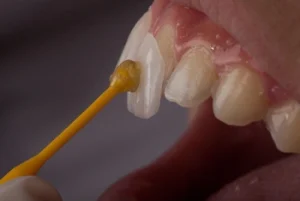 After a veneer is removed, the next step depends on the condition of the tooth underneath and the patient’s goals.
If the tooth was prepared for a traditional porcelain veneer, the reduced enamel surface will need some form of coverage or protection going forward. Options include replacement veneers, dental bonding, or a dental crown in cases where more extensive coverage is needed.
If the original veneers were composite with minimal preparation, and the tooth is in good condition, the dentist may be able to polish the surface and leave the tooth without further restoration, or apply a fresh layer of composite as an alternative.
A thorough assessment of the tooth structure, gum health, and bite is always part of this process. The right restoration choice depends on individual factors that vary from patient to patient.
A Considered Approach to Veneer Decisions
Understanding that veneers, particularly porcelain veneers, represent a permanent change to the tooth is one of the most important things to grasp before treatment. Removal is possible, but it does not undo that change. It opens a different chapter of the same treatment journey.
If you are considering veneers for the first time or exploring what your options might be after existing veneers, a dental assessment is the appropriate place to start. Individual outcomes vary, and what is suitable for one patient may not be the right approach for another.
At Good Choice Dental, our team can assess your current situation, explain the options clearly, and help you understand what removing or replacing veneers would involve for your specific teeth.
Call us on (02) 8203 8760 or book an appointment online.
Note: Any surgical or invasive procedure carries risks. Before proceeding, you should seek a second opinion from an appropriately qualified health practitioner.
Frequently Asked Questions
How long does veneer removal take?
The time required depends on the number of veneers being removed and the material. Composite veneer removal is generally faster as it involves polishing away a softer material. Porcelain veneer removal is more involved and requires careful work to avoid damaging the tooth underneath. A dentist will give a more specific estimate based on the individual case.
Can veneers be removed and replaced with a different type?
Yes. After removal, the tooth can be assessed for suitability for a different restoration. Depending on the condition of the tooth, options may include composite veneers, new porcelain veneers, dental bonding, or a dental crown. The right option depends on how much tooth structure remains and the patient’s goals.
References
Australian Dental Association. (n.d.). ‘Crowns, Bridges and Veneers’. Teeth.org.au. Sydney, NSW: Australian Dental Association. https://teeth.org.au/crowns-bridges-and-veneers
Better Health Channel. (n.d.). ‘Cosmetic dentistry and teeth whitening’. Better Health Channel. Melbourne, VIC: Victorian Government Department of Health. https://www.betterhealth.vic.gov.au/health/conditionsandtreatments/cosmetic-dentistry-and-teeth-whitening
Healthdirect Australia. (2026). ‘Veneers’. Healthdirect Australia, 15 June. Sydney, NSW: Healthdirect Australia. https://www.healthdirect.gov.au/veneers



Recent Comments